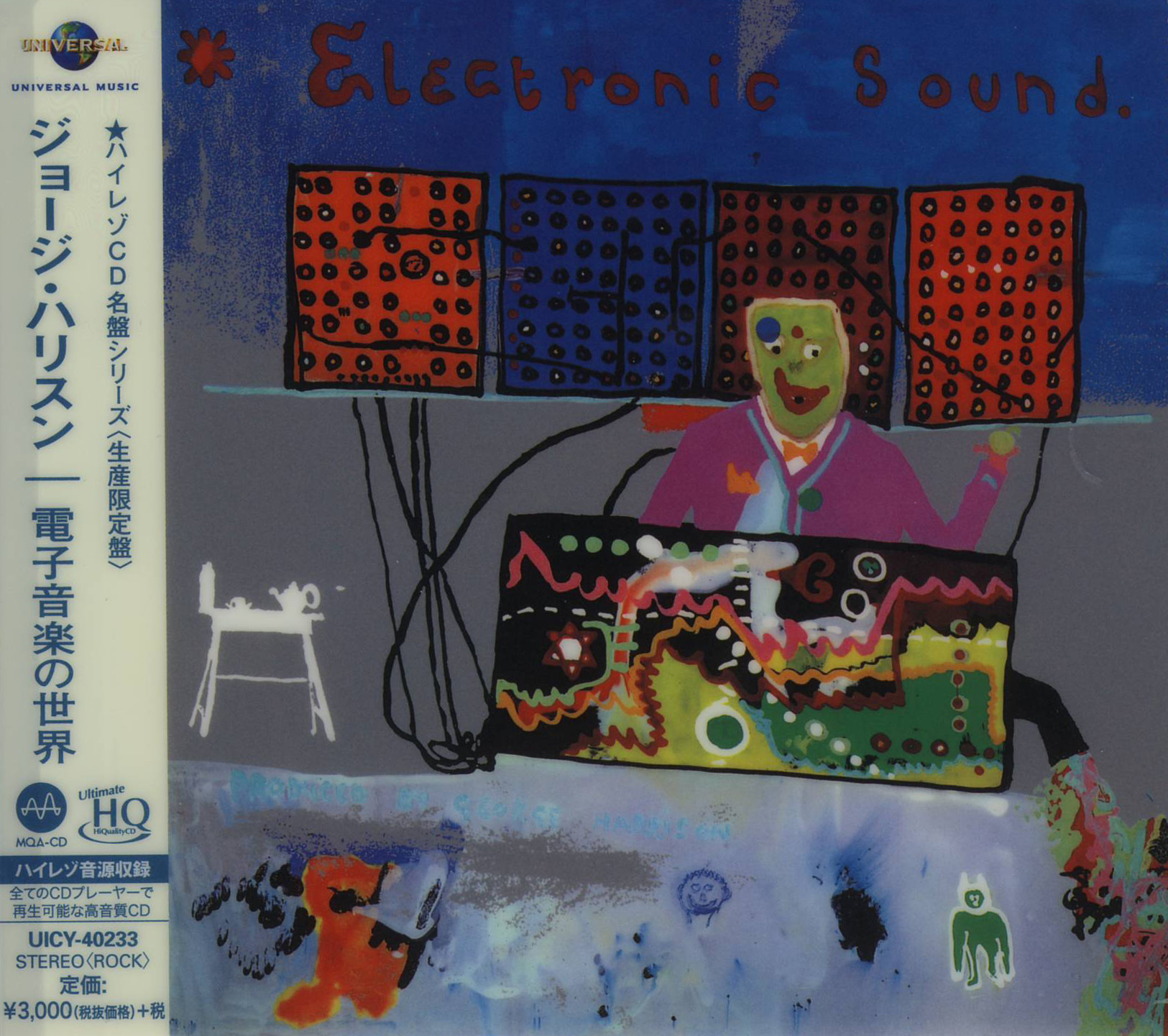
George Harrison – Electronic Sound (UHQCD)
| Selectați o variantă | |
| Termen de retur 14 zile |
134lei
Descriere
George Harrison war nicht nur Gitarrist bei den Beatles, sondern auch ein Pionier elektronischer Musik. Mit seinem zweiten Soloalbum Electronic Sound aus dem Jahr aus dem Jahr 1969 war er einer der wenigen Rockmusiker, die einen Moog-Synthesizer in ihrem Genre einsetzten – was er kurze Zeit später auch mit den Beatles auf Abbey Road tat. Die Arbeit mit dem Moog, der technisch noch in den Kinderschuhen steckte, aber klanglich interessantes Potential barg, war ein großes Abenteuer. Wenngleich dies bei der Erstveröffentlichung nicht von allen Kritikern honoriert wurde, können die Kompositionen sich heute durchaus behaupten.
UHQCD stands for Ultimate High Quality Compact Disc and is a joint development of the Japanese CD replication company Memory-Tech and the Audio Quality CD Company from Hong Kong. Unlike conventional CDs, UHQCDs are not pressed from polycarbonate, but cast from a photopolymer and cured with UV light. Another layer of high-purity polycarbonate is applied to the softer photopolymer for scratch protection. The combination results in significantly reduced reflection of laser light inside the CD and an unmatched precise edge transition between pits and lands of the CD. UHQCDs are 100% compatible with standard CD players. Musically, the result is a sound image strongly reminiscent of analog master tapes.
While Universal Music Japan’s first UHQCD series relied on the DSD data of previous SHM-SACD releases, with increasing popularity, albums that had not previously been released as SHM-SACD are now appearing. Typically, the Universal Archive master tapes are re-converted to DSD for this purpose. UHQCDs are ideal for music lovers who want to get as close as possible to the sound of the recording, but do not own an SACD player.
Informații suplimentare
| Artist | George Harrison |
|---|---|
| Format | UHQCD |
| Gen muzical | Rock / Pop |