
Wayne Shorter – Adam’s Apple (UHQCD)
| Selectați o variantă | |
| Termen de retur 14 zile |
102lei
Descriere
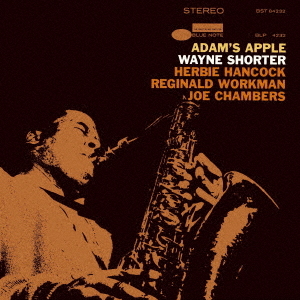
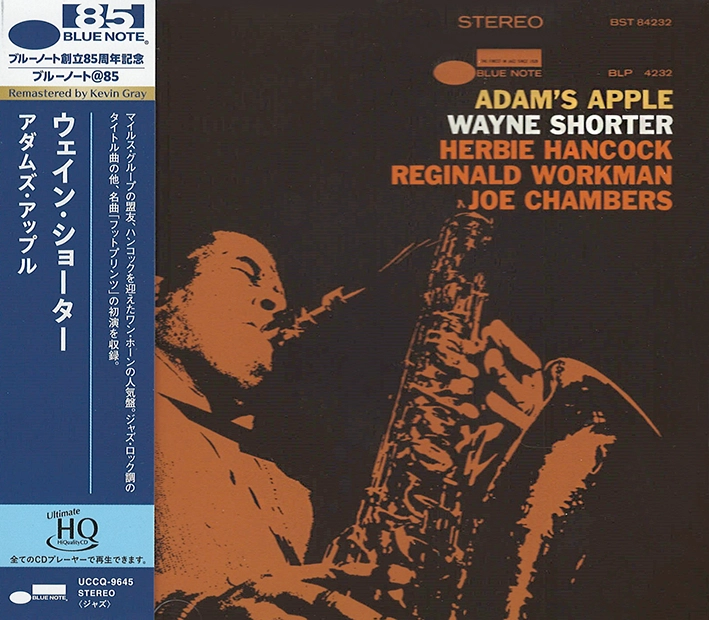
Wayne Shorter had already achieved great success with audiences and received extremely positive reviews for his first albums for Blue Note, including tracks that would become timeless classics of the jazz discography, such as “Night Dreamer”, “JuJu” and “Speak No Evil” when the American label released “Adam’s Apple” in 1966. Thanks in part to the contributions of pianist Herbie Hancock, double bassist Reggie Workman, and drummer Joe Chambers, the album immediately went down in Blue Note history as the saxophonist’s greatest recording ever and one of the highlights of the fruitful post-bop era. Allaboutjazz wrote: “Adam’s Apple is at least as good as anything else in Shorter’s Blue Note catalog, which means it’s excellent. Another listenable record in a long line of listenable records.”
Shorter wrote five of the six pieces on the album. Highlights of this extraordinary album include the lively title track, the moving “502 Blues (Drinkin‘ And Drivin’)” by Jimmy Rowles, “El Gaucho”, a Shorter-composed track with bossa influences, the delicate ballad “Teru” and the first recording of his immortal composition “Footprints”, which Shorter would re-record a few months later with Miles Davis’ quintet for the album “Miles Smiles”. The album ends with the very moving “Chief Crazy Horse”, which is characteristic of Shorter’s harmonious interweaving and features a brilliant solo by Chambers.
As part of the extremely popular “Blue Note 85th Anniversary Reissue Series” Universal Music Japan presents the sonically impressive remastering of this jazz classic by the legendary Kevin Gray, who is also responsible for Blue Note US’s analog reissues such as “Tone Poet” and “Classic Vinyl” – as a limited Japan only UHQCD with OBI stripe. The original recording sessions for “Adam’s Apple” took place on February 3 and 24, 1966 at Rudy Van Gelder Studio in Englewood Cliffs, New Jersey.
UHQCD stands for Ultimate High Quality Compact Disc and is a joint development of the Japanese CD replication company Memory-Tech and the Audio Quality CD Company from Hong Kong. Unlike conventional CDs, UHQCDs are not pressed from polycarbonate, but cast from a photopolymer and cured with UV light. Another layer of high-purity polycarbonate is applied to the softer photopolymer for scratch protection. The combination results in significantly reduced reflection of laser light inside the CD and an unmatched precise edge transition between pits and lands of the CD. UHQCDs are 100% compatible with standard CD players. Musically, the result is a sound image strongly reminiscent of analog master tapes.
While Universal Music Japan’s first UHQCD series relied on the DSD data of previous SHM-SACD releases, with increasing popularity, albums that had not previously been released as SHM-SACD are now appearing. Typically, the Universal Archive master tapes are re-converted to DSD for this purpose. UHQCDs are ideal for music lovers who want to get as close as possible to the sound of the recording, but do not own an SACD player.
Lista pieselor
1. Adam’s Apple
2. 502 Blues (Drinkin’ And Drivin’)
3. El Gaucho
4. Footprints
5. Teru
6. Chief Crazy Horse
Informații suplimentare
| Format | UHQCD |
|---|---|
| Gen muzical | Jazz |